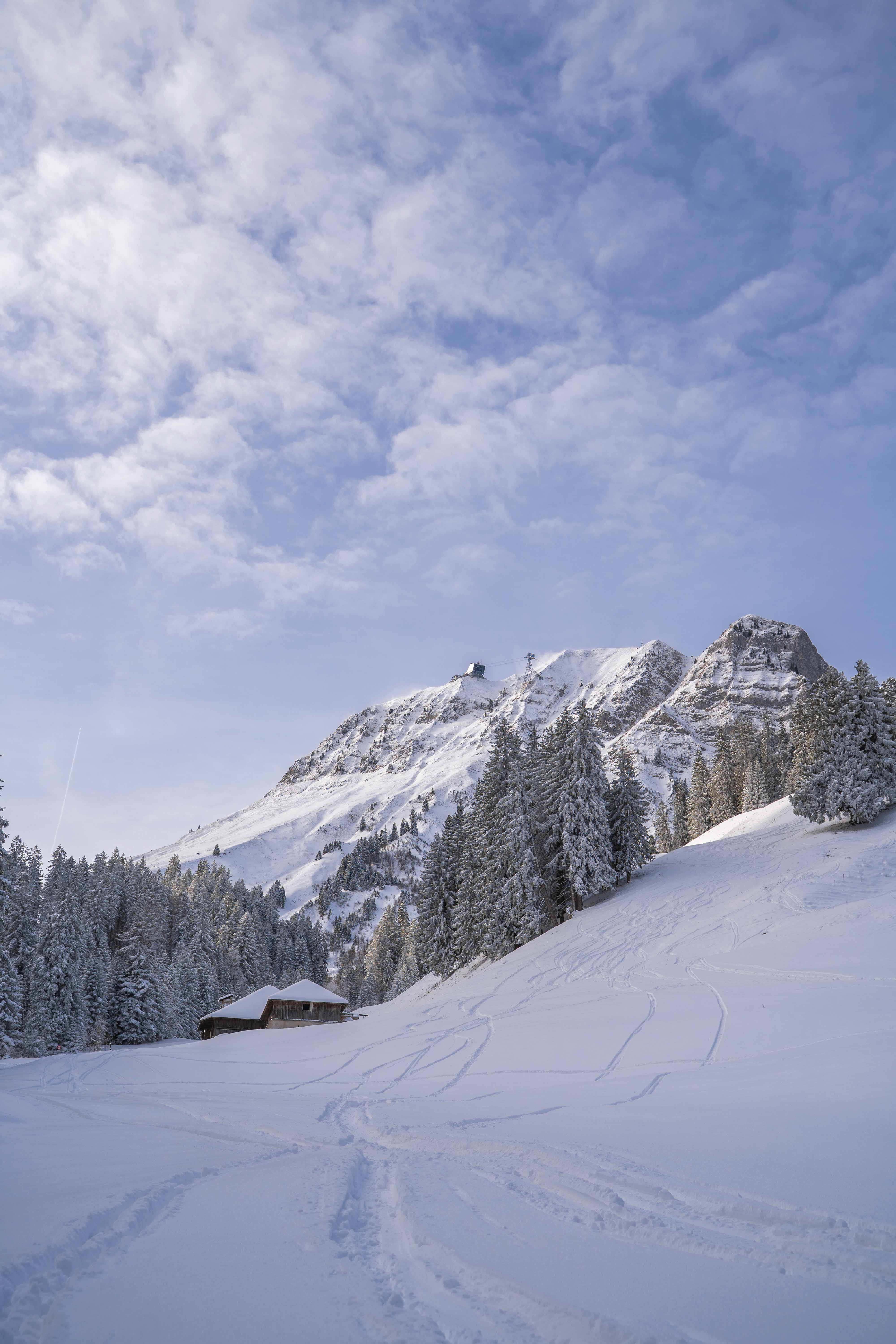
Replaceable outer skin
A single-material surface layer, chosen so it can be recycled, designed to be renewed as it wears without replacing the structural ski beneath it.
PEAK2002 TECHNOLOGY
A quieter ride. A longer life.
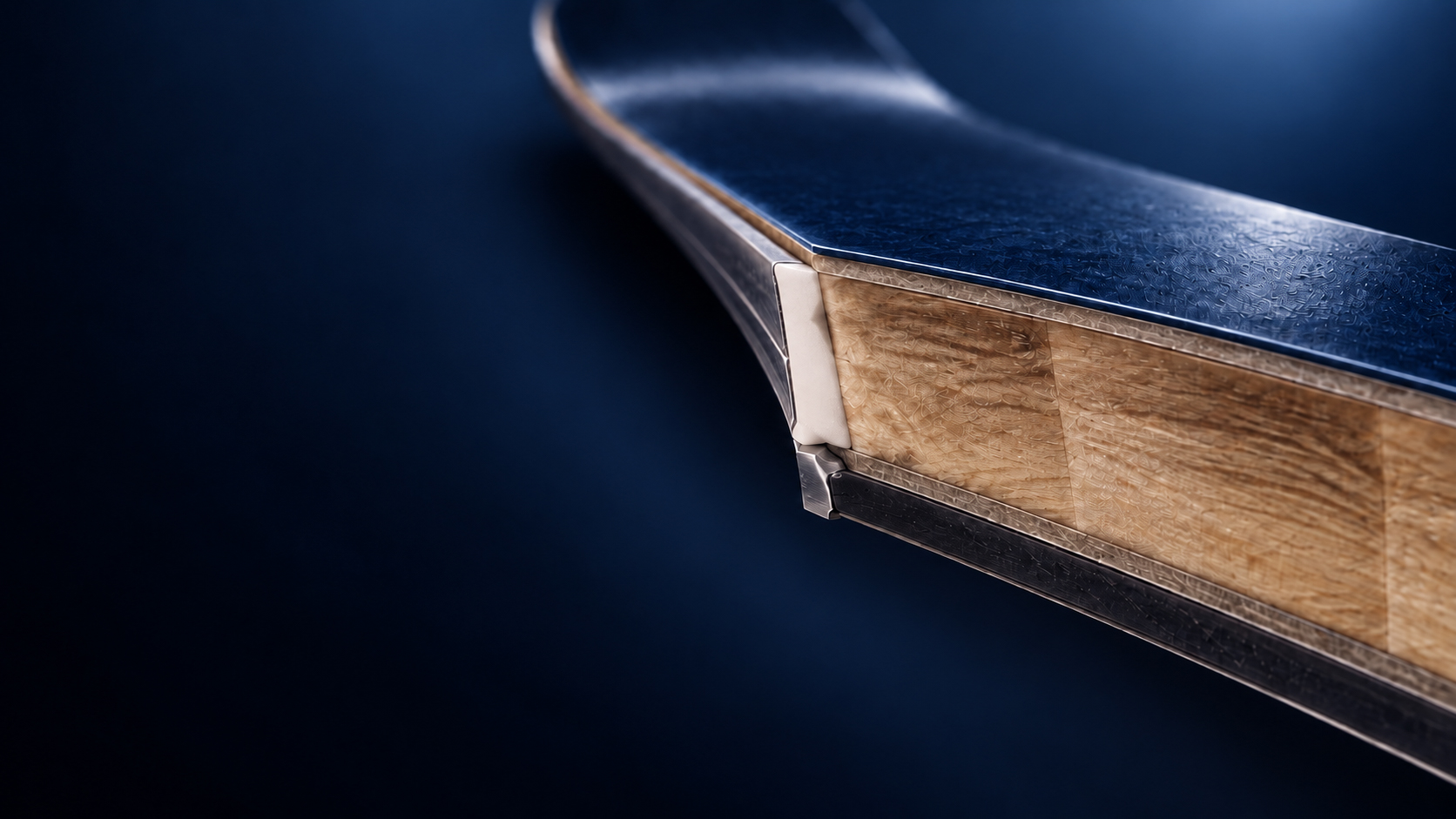
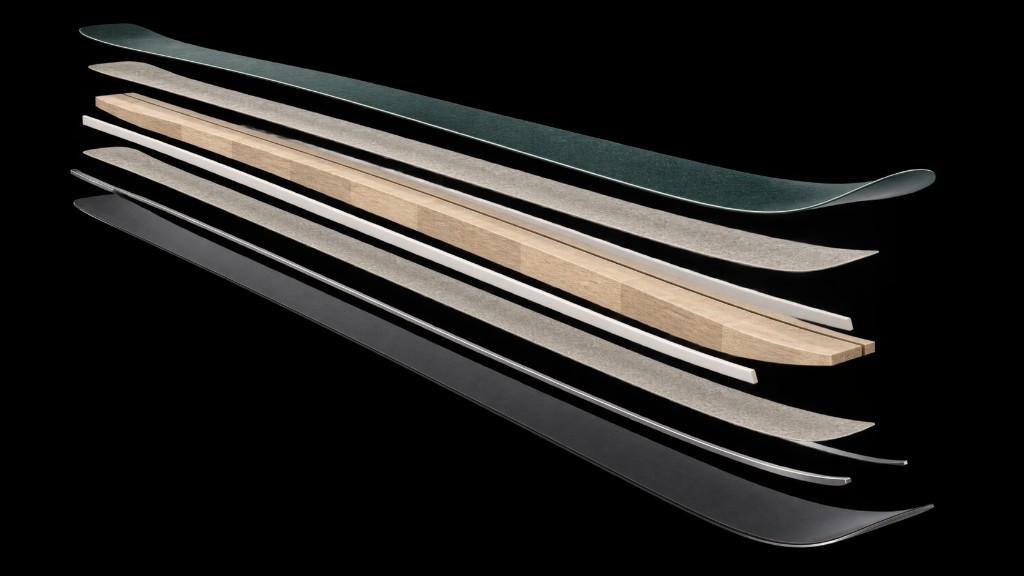
A Peak2002 ski is a flax-reinforced wood core wearing a replaceable skin. Scroll to travel the pair, then open the layers.
Loading the pair
Scroll to explore
PEAK2002 TECHNOLOGY
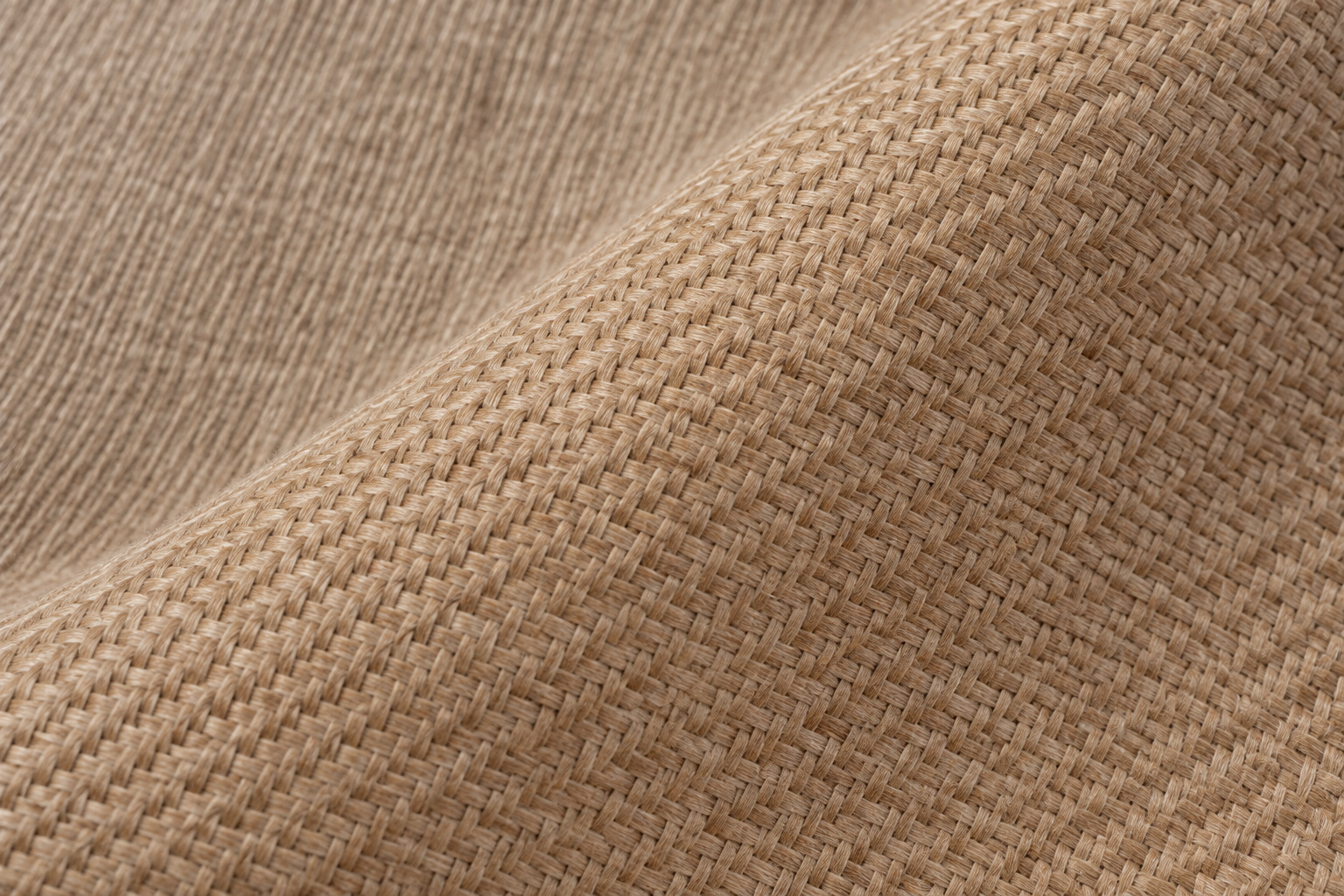
Flax damps vibration, for a quieter, more composed ride. We're measuring the effect in our own layup.
Europe is the world's leading producer of flax fibre, mostly grown in France, Belgium and the Netherlands. Flax is a zero-waste plant: the whole stem is used. Grown in rotation with other crops, which helps keep soil healthy.
Glass fibre adds stiffness and moisture protection; flax brings the damping.
The first Peak2002 ski began as a drawing and was built entirely by hand. From shaping the mould to laying every layer and finishing every edge, this is how the first prototype went from an idea to its first turns on snow.
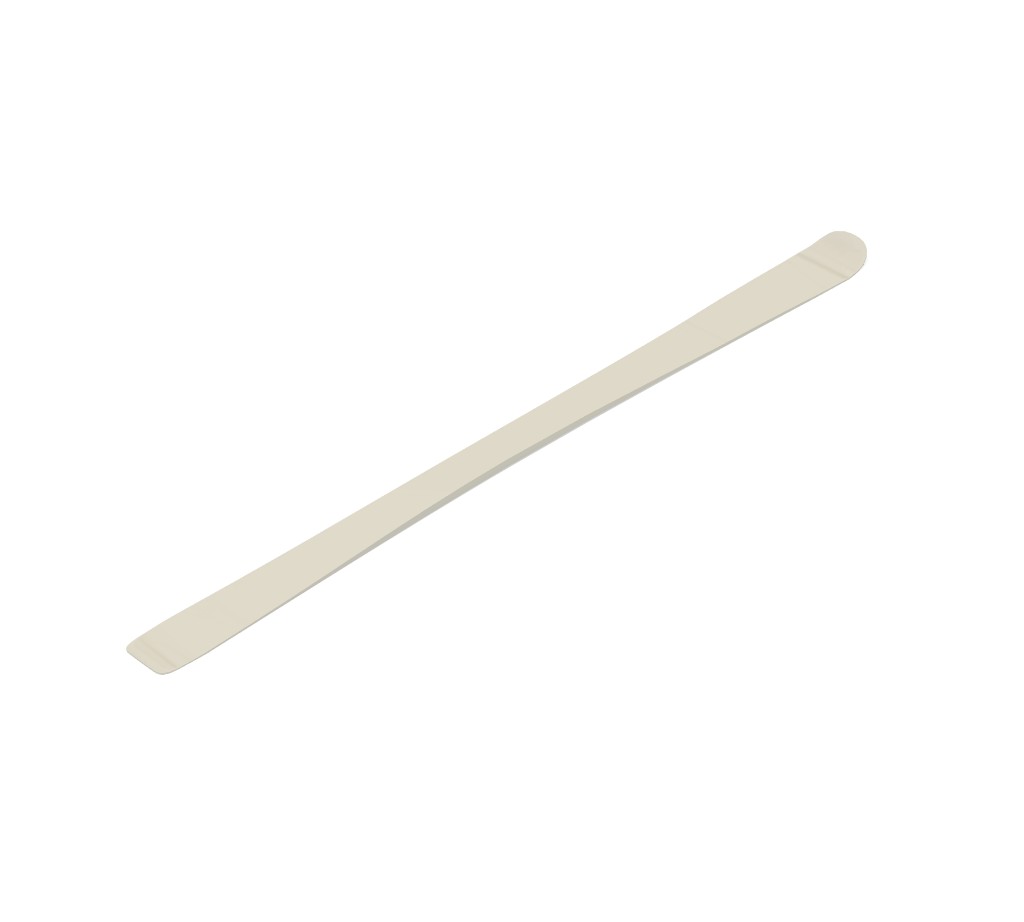
01 — Designing the ski. The process starts by defining the ski’s length, width, sidecut and flex. These decisions determine both its shape and how it should feel on snow.
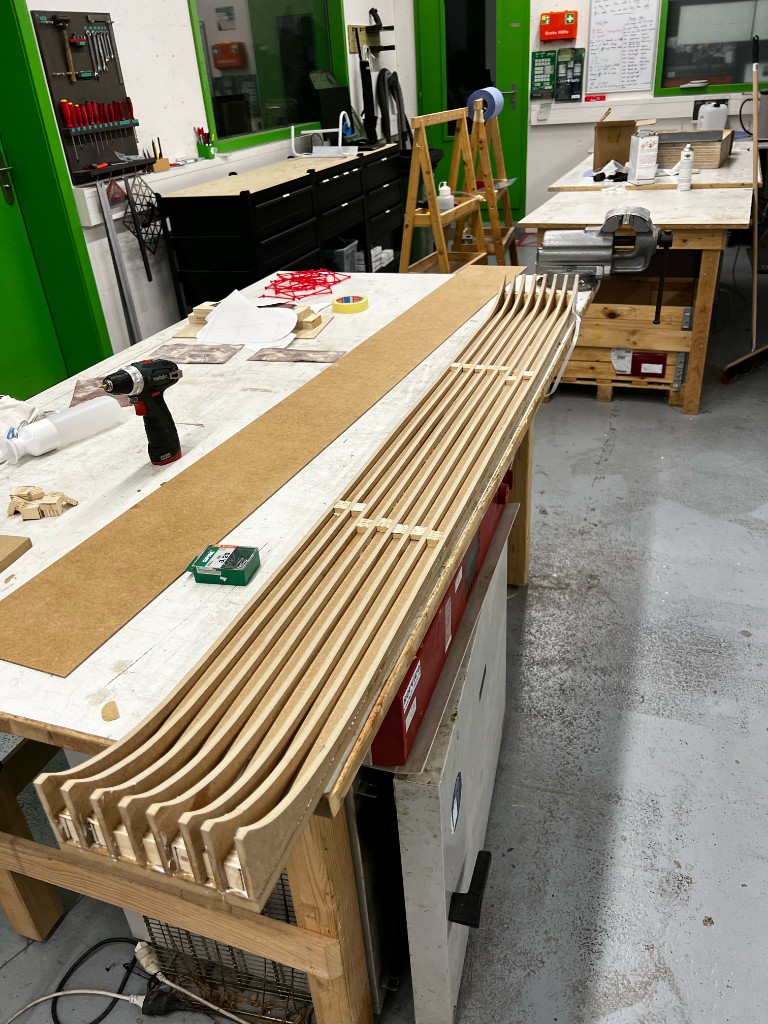
02 — Making the mould. A dedicated mould is built to create the ski’s profile, camber and tip and tail rise. It becomes the foundation for every layer that follows.
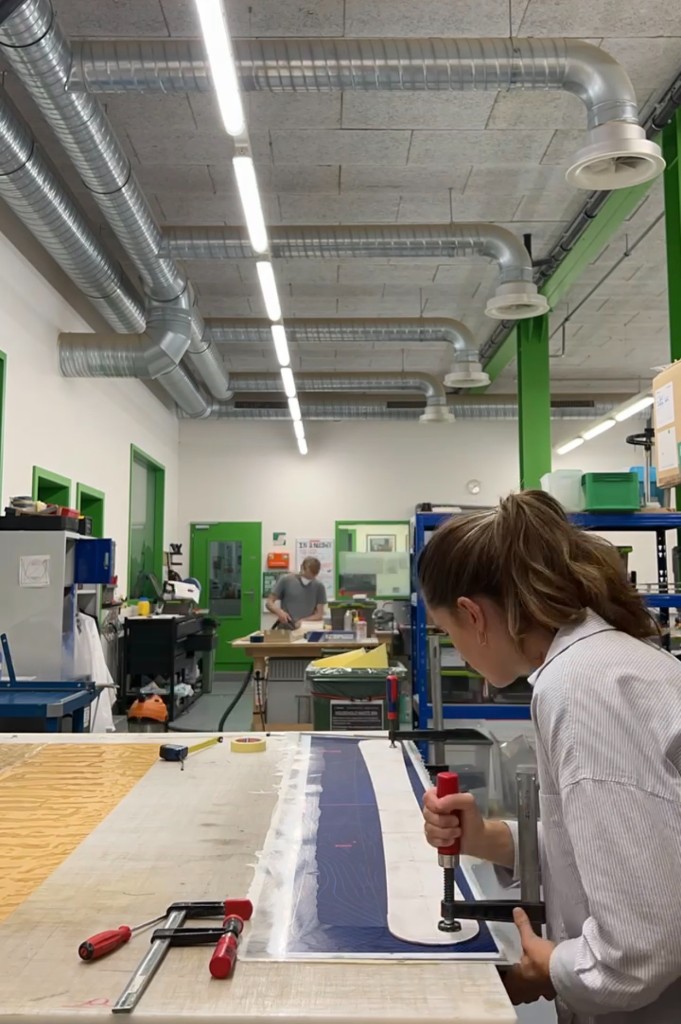
03 — Cutting the topsheet. The protective topsheet is cut to the ski’s outline. It carries the graphic and forms the first line of defence against wear, UV and transport.
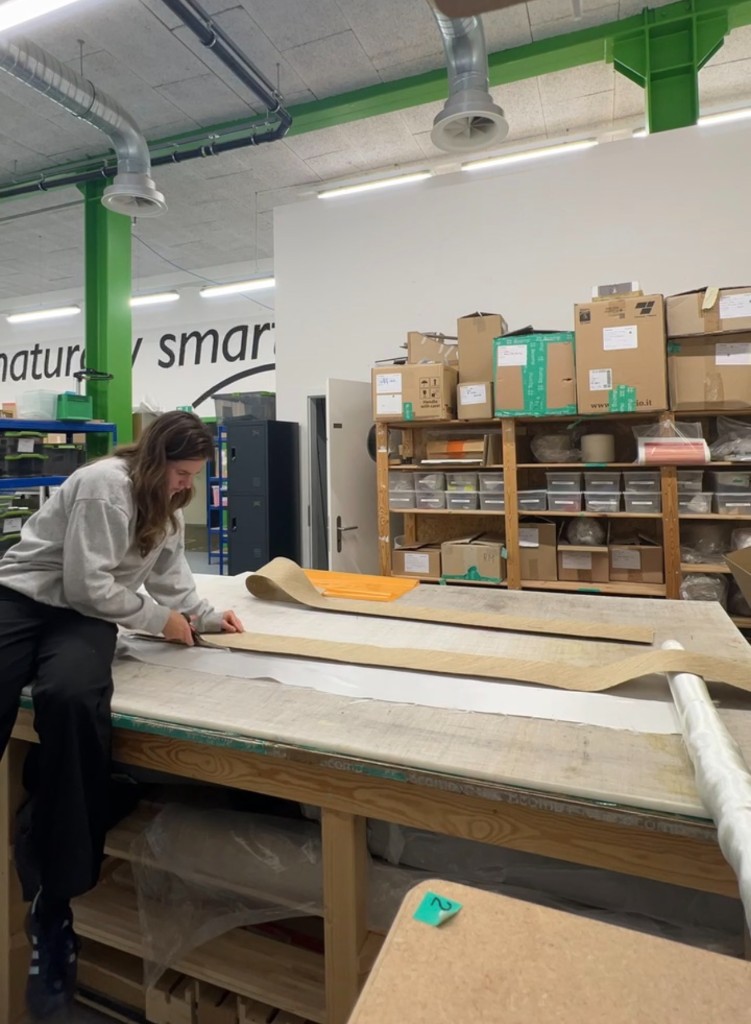
04 — Cutting the fabrics. The flax and fibreglass fabrics are cut using templates. Each piece is shaped and oriented for its specific position within the ski.
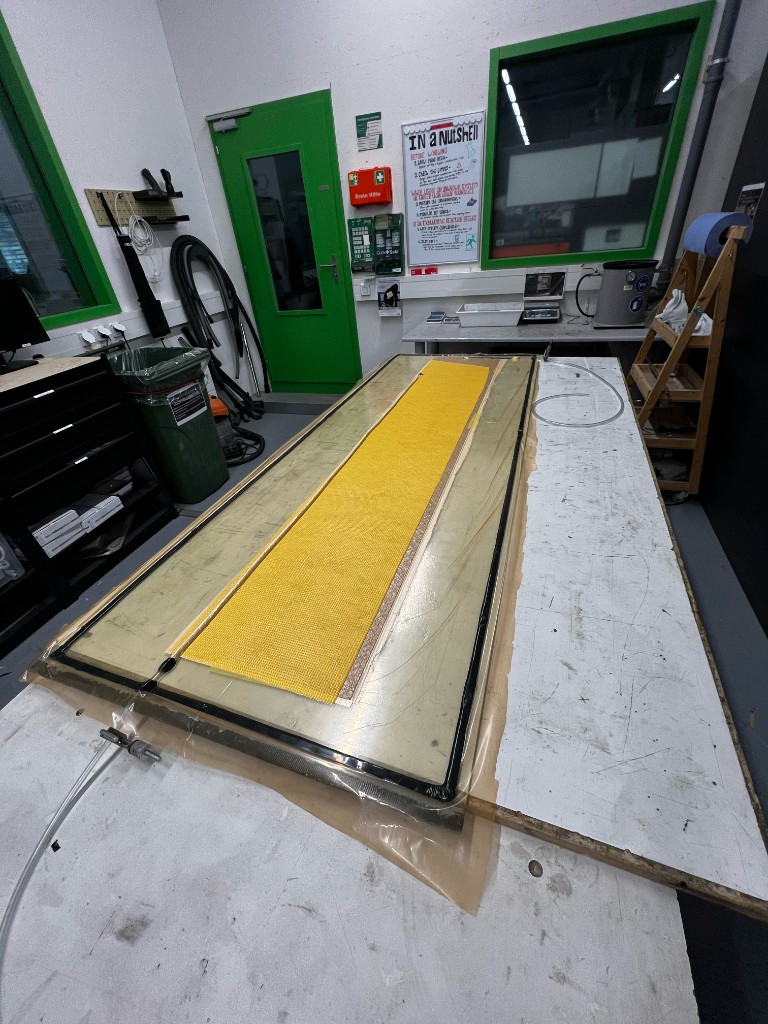
05 — First lamination. The first composite elements are laminated with resin. Careful wetting ensures that the fibres bond evenly without adding unnecessary weight.
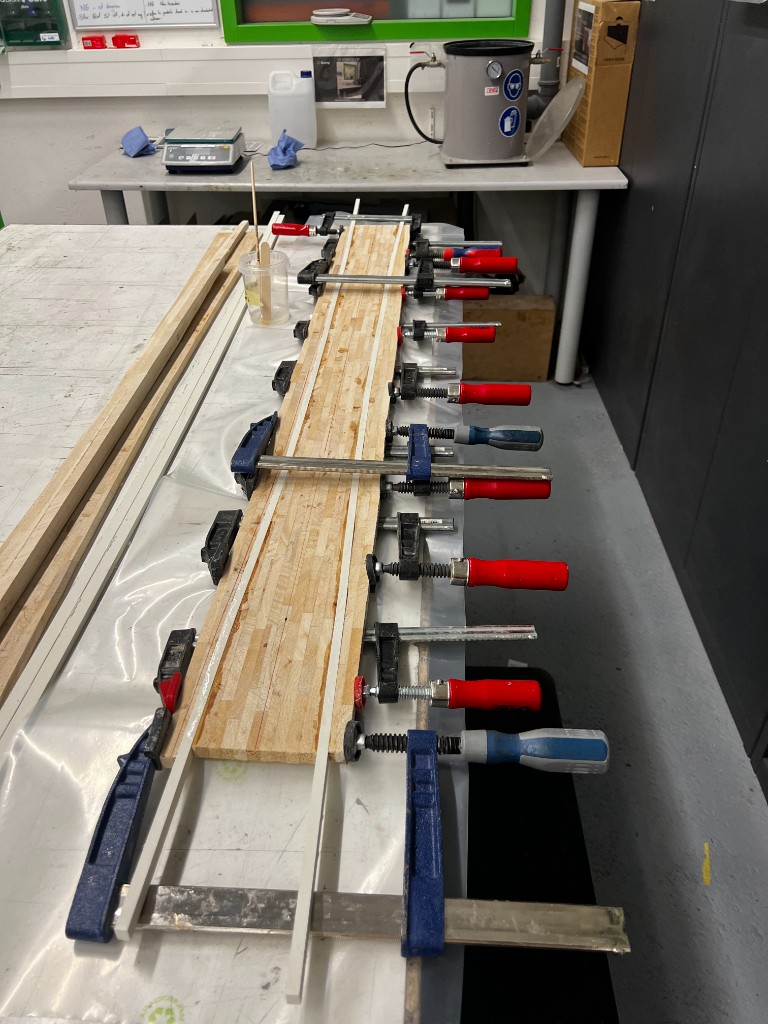
06 — Assembling the sidewalls. The sidewalls are bonded to the wooden core. Together, they protect the construction and transfer force towards the ski’s edges.
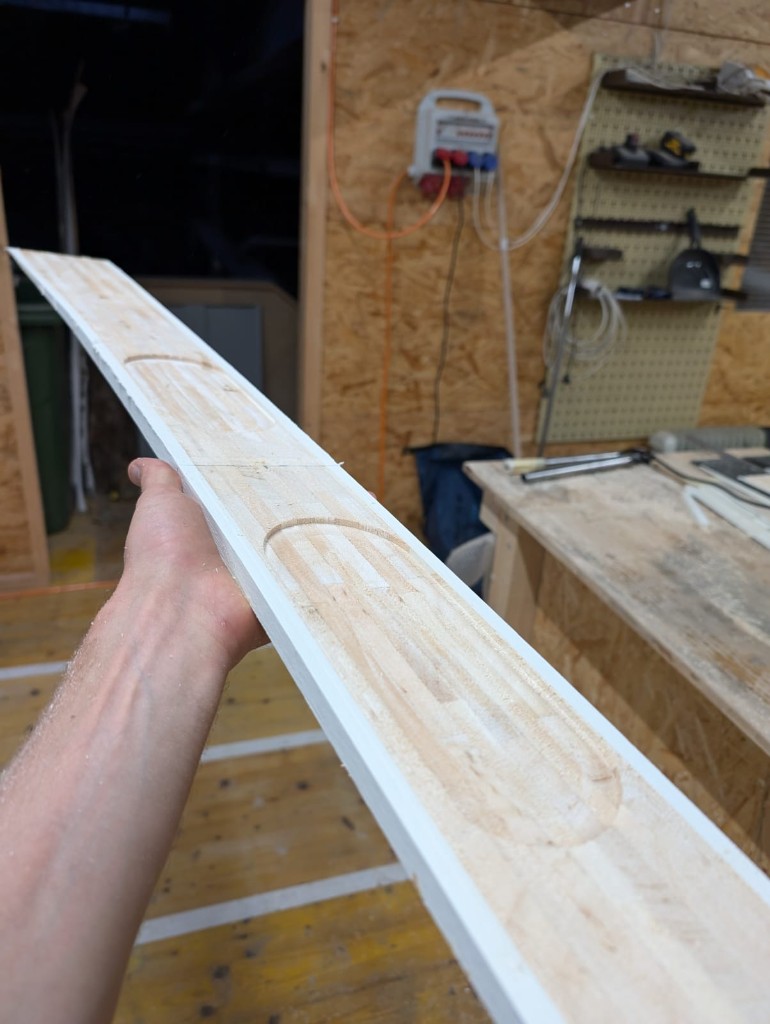
07 — Cutting the core. The wooden core is cut and profiled to control the ski’s thickness and flex from tip to tail.
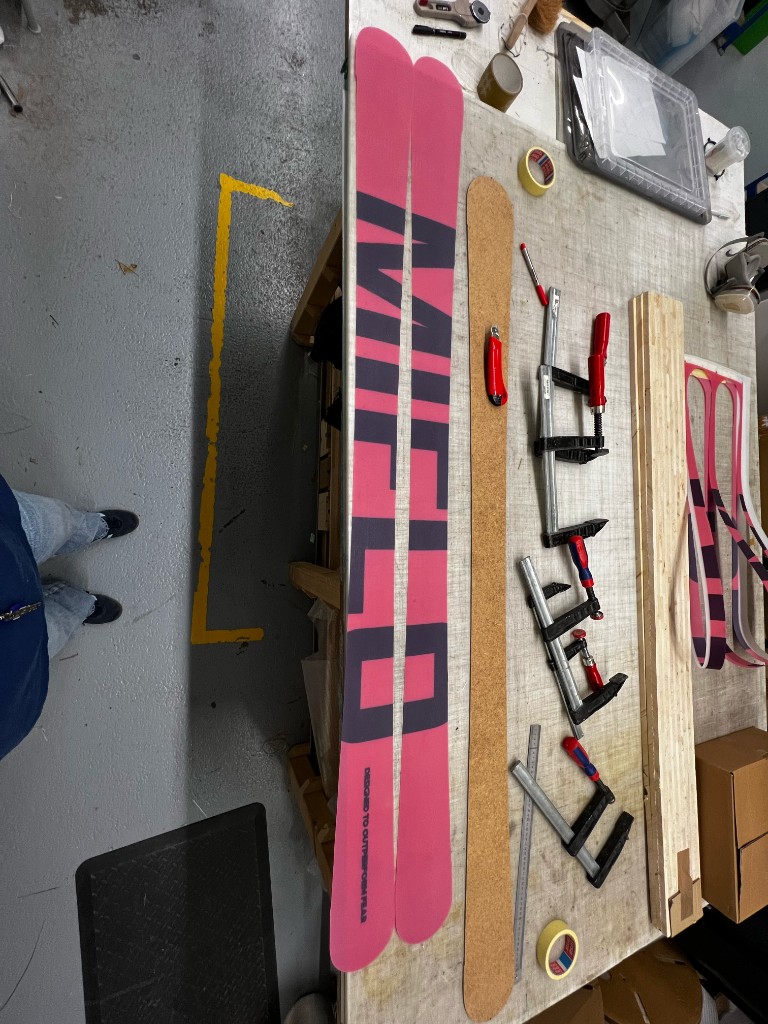
08 — Cutting the base. The base material is cut precisely to the ski’s final outline, creating the lower surface that will run across the snow.
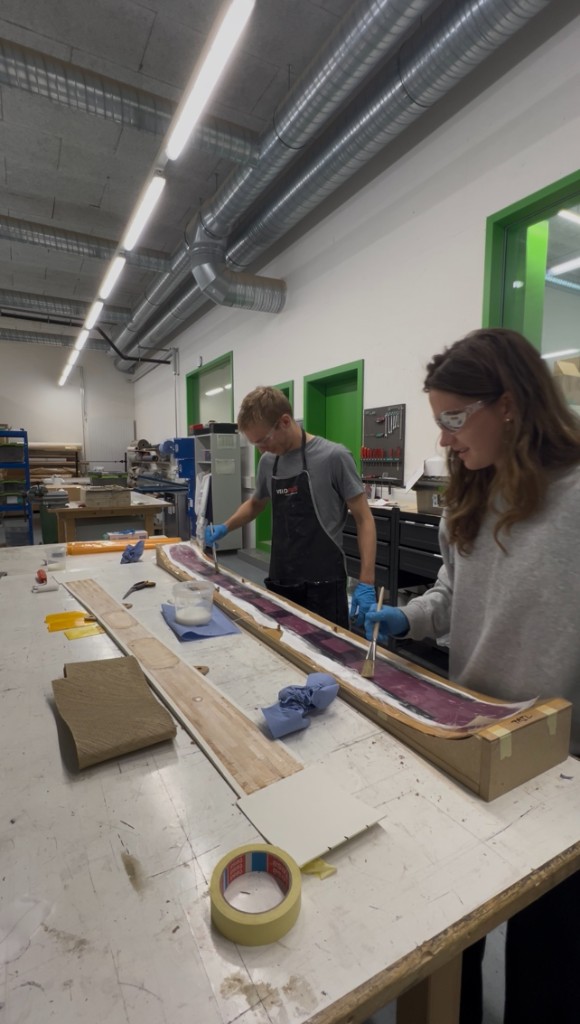
09 — Building the full layup. The base, composite fabrics, prepared core and topsheet are placed into the mould in sequence. Every layer is aligned, wetted with resin and assembled by hand.
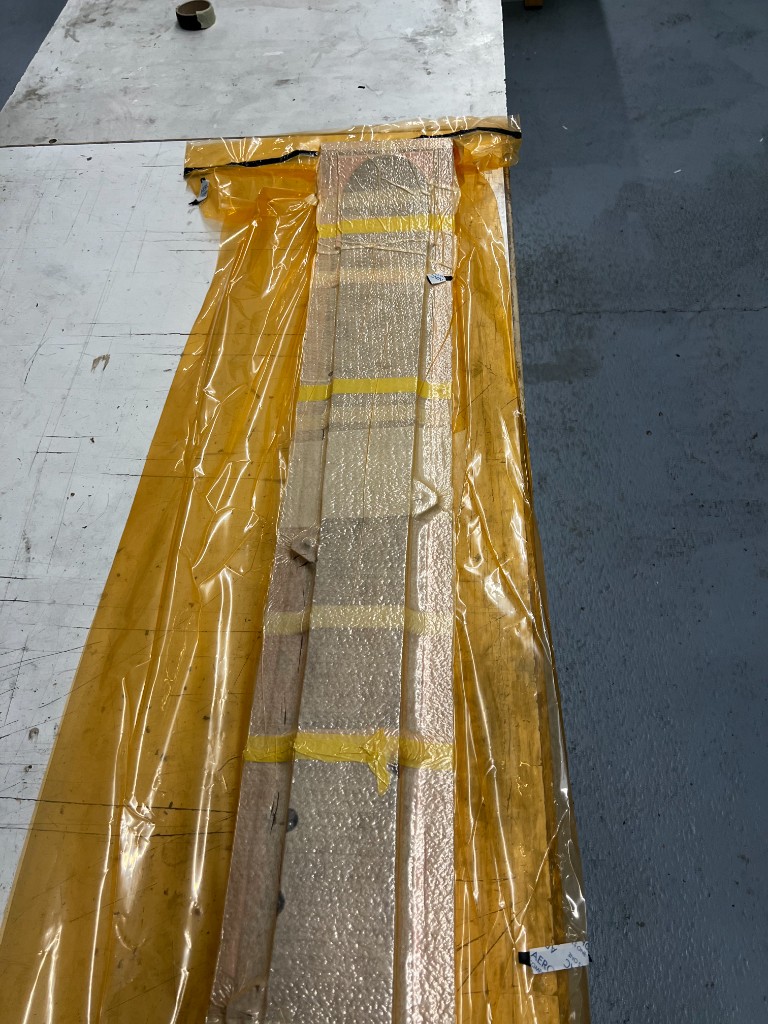
10 — Pressing and curing. The complete layup is compressed inside the mould and left to cure. Pressure bonds the layers together and locks in the ski’s final shape.
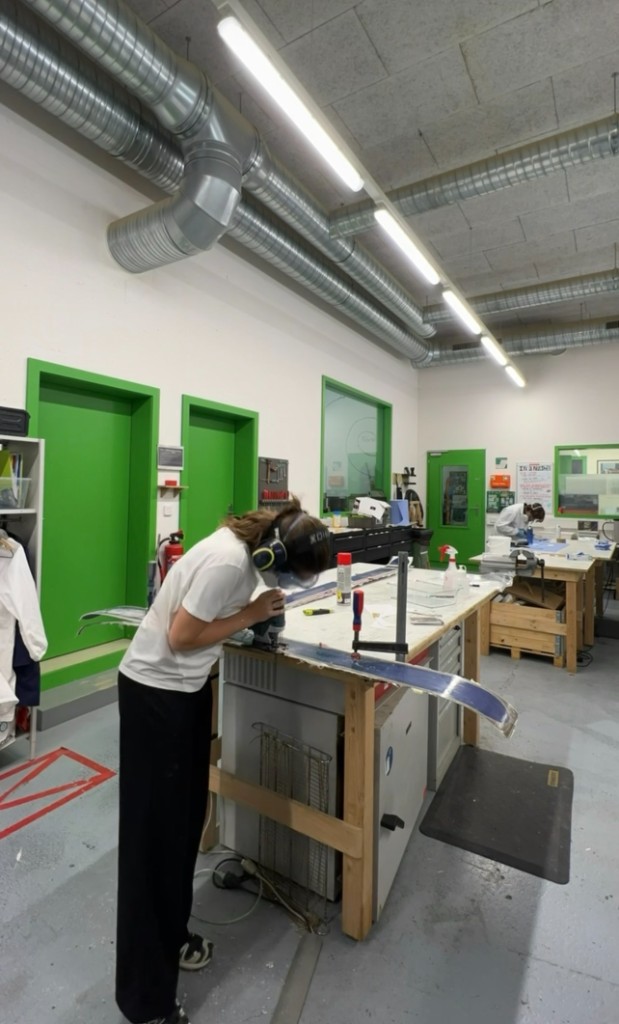
11 — Cutting the ski. Once cured, the ski is removed from the mould. Excess fabric and resin are cut away to reveal the finished profile.
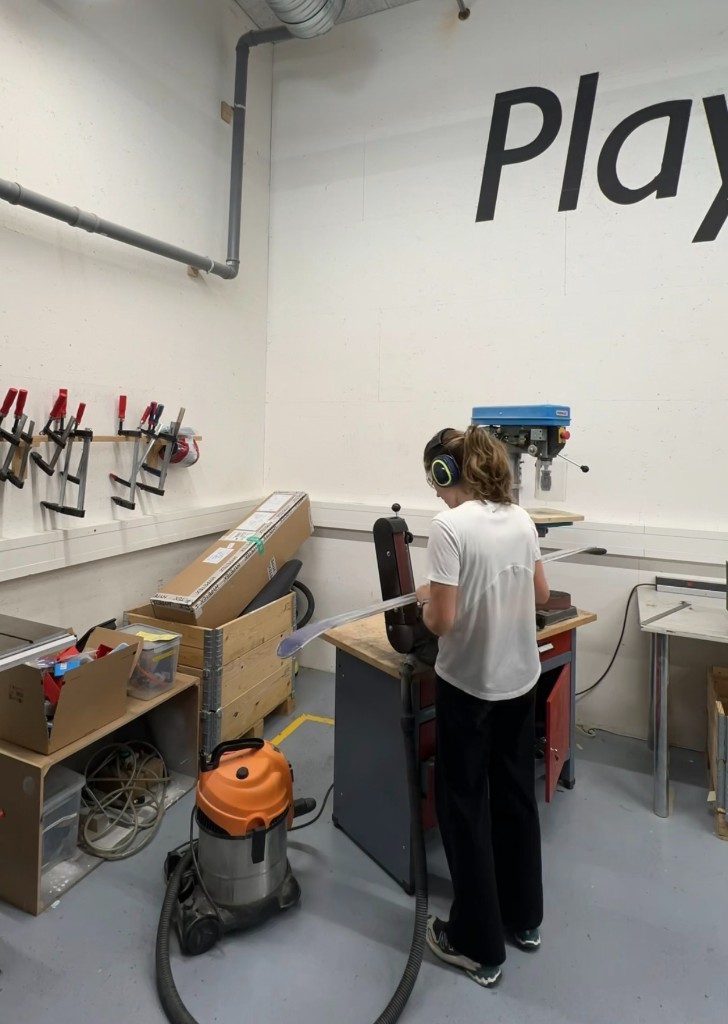
12 — Sanding and finishing. The sidewalls, tip and tail are sanded all the way around. The edges and base are finished until the ski is clean, smooth and ready for snow.
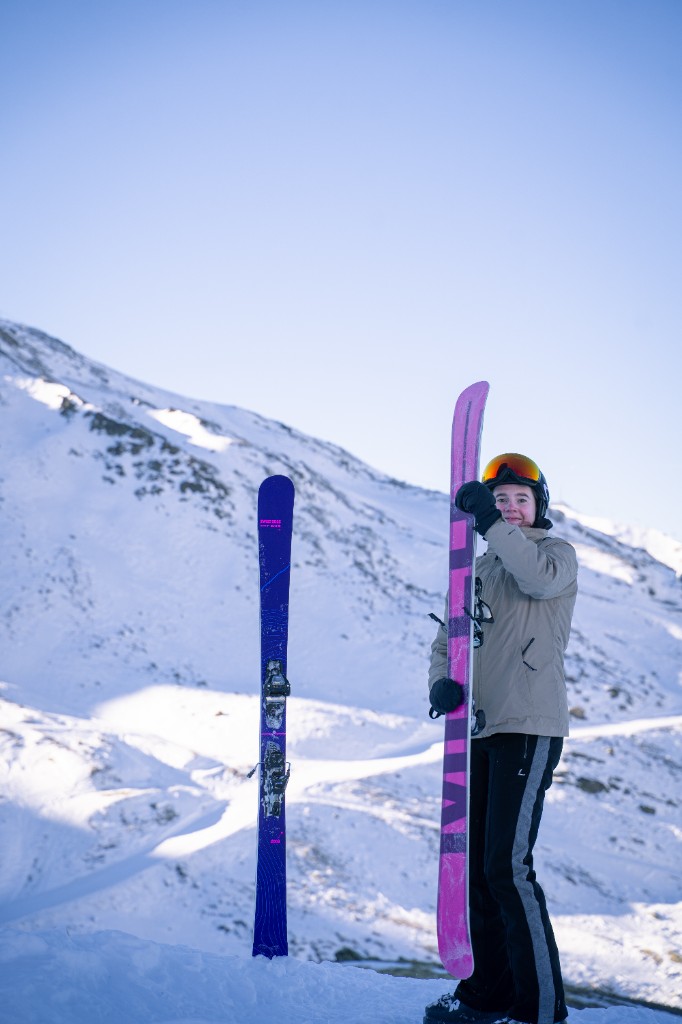
13 — First days on snow. The finished prototype leaves the workshop and is tested in the Alps. Every run reveals something new, helping refine the ski until it performs as intended.
Ski Passport · Example · Planned feature
Every Peak2002 ski gets its own passport. It starts the day the ski is built and grows every time the skin is renewed. Scan the tip of the ski and you see its whole life — and it stays readable, whatever happens to us.
Moléson Blue · 163 cm
Inside this ski
Secured on a public ledger, in an open format. Readable without Peak2002.
Step 6 of 6 · Season 3
A QR code on the ski and a tag laminated inside open the passport on any phone.
Every skin, service and repair is added by us, so the record can be trusted.
The passport moves to the new owner in one step. The history stays with the ski.
Kept on a public ledger in an open format, so the record stays readable even without Peak2002.
Example passport. The Ski Passport is a planned feature; details may change before launch.
Flax damps vibration, for a quieter, more composed ride. We're measuring the effect in our own layup. Europe is the world's leading flax producer. Glass fibre adds stiffness and moisture protection; flax brings the damping.
Peak2002 skis are built around a flax-reinforced wood core with a replaceable skin. At the end of a season the skin can be renewed so the ski stays in service — that is the design we are testing on prototypes now.
No. This page explains the shared construction philosophy used across the range, with tuning differences per model.
Planned: every Peak2002 ski gets a Ski Passport — a record of its materials, every skin renewal, service and change of owner. Peak2002 adds each entry, ownership moves with the ski by changing the email, and the record is kept on a public ledger in an open format so it stays readable even without Peak2002.